


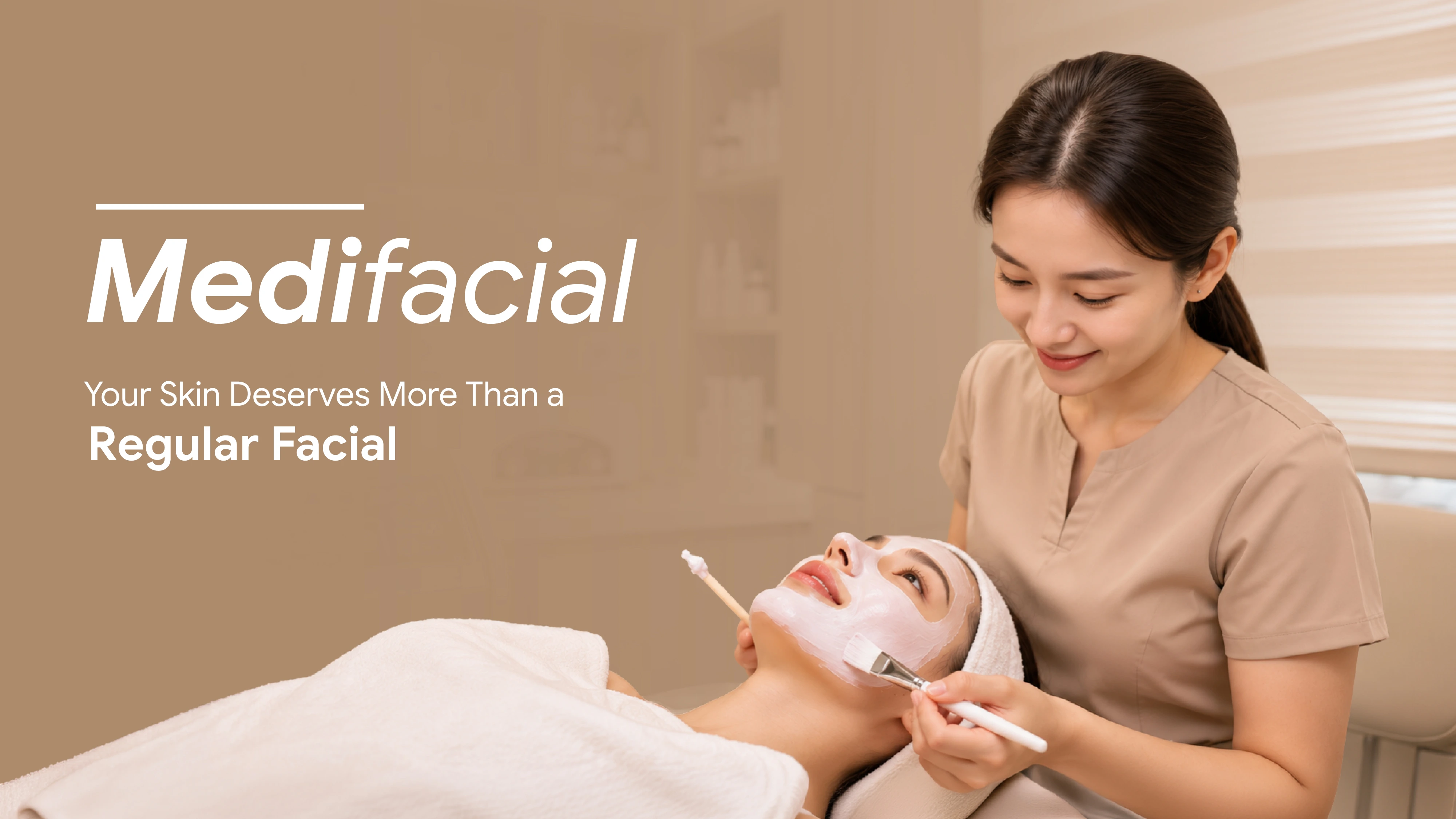
Birthdays, weddings, special occasions, paydays, and even ordinary days can be reasons to book a facial. After all, facials have become a part of our beauty rituals.
But when was the last time you thought about what your facial actually does for your skin? Traditional salon facials follow familiar routines of cleansing, exfoliation, and moisturising. Today, medifacial treatments offer a more specialised approach to skincare, combining professional skin assessment with targeted treatments designed to address individual skin concerns.
From improving hydration and skin texture to addressing dullness and congestion, medifacials go beyond a conventional beauty routine by focusing on your skin's specific needs. So, what exactly is a medifacial, how does it work, and is it the right treatment for your skin? Let's explore.
What Is a Medifacial Treatment?
A medifacial, also known as a medical facial, is a professional skin treatment designed to improve the appearance and condition of the skin through a combination of cleansing, exfoliation, hydration, and other techniques under a dermatologist’s supervision. Depending on the treatment selected, it involves specialised ingredients, chemical exfoliation, or aesthetic devices that support specific skin goals. The treatment approach depends on the individual's skin condition and the technologies or formulations used. Medifacials are commonly chosen by individuals looking to address:
- Dull and tired-looking skin
- Dehydration and dryness
- Uneven skin tone
- Rough skin texture
- Congested pores
- Excess oiliness
- Mild pigmentation concerns
- Early signs of skin ageing
What Makes a Medifacial Different?
Unlike traditional salon facials, a medifacial focuses on more than the immediate appearance of the skin. It incorporates targeted techniques to support skin cleansing, exfoliation, hydration, and overall skin quality. The treatment is selected based on your skin's needs rather than a one-size-fits-all routine. Personalisation is one attribute that distinguishes a medifacial from spa/salon based treatment.
To get a clear understanding, read, Medical Facial Vs. Salon Facial

How Medifacial Treatments Work?
Medifacials combine different skincare techniques to address specific concerns while improving the skin's overall appearance.
- Skin Assessment: An assessment of your skin type, texture, hydration levels, sensitivity, and concerns helps determine which type of facial is appropriate and beneficial.
- Cleansing: The skin is cleansed to remove surface impurities, excess oil, makeup residue, and accumulated dirt, so it stays prepared for the subsequent treatment steps.
- Exfoliation: Accumulated dead skin cells from the skin's surface are removed using gentle exfoliating products, specialised devices, or carefully selected exfoliating agents.
- Extraction or Deep Cleansing: Some medifacials include techniques to remove superficial pore congestion and impurities. When necessary, deep cleansing should be performed carefully under professional supervision.
- Targeted Treatment: This is where the medifacial is customised according to the individual's skin concerns. Depending on the treatment, the therapist uses specialised serums, hydrating formulations, exfoliating agents, or aesthetic technologies.
- Hydration and Skin Protection: The treatment concludes with appropriate moisturisation and sun protection. These steps help maintain skin comfort and protect the skin following exfoliation or other treatment procedures. The overall objective is to leave the skin feeling refreshed, hydrated, and smoother, while supporting improvements in the concerns addressed by the selected treatment.
The Dos and Don'ts Post-Treatment
After a medifacial treatment, your skin may feel refreshed and hydrated. However, depending on the treatment, it may also experience temporary sensitivity, redness, or dryness. Proper aftercare helps maintain skin comfort and minimise unnecessary irritation.
Dos
- Apply a broad-spectrum sunscreen with SPF 30 or higher.
- Use a gentle cleanser and moisturiser recommended for your skin.
- Keep your skincare routine simple immediately after treatment.
- Follow your skincare expert's aftercare instructions.
- Stay well hydrated and avoid excessive sun exposure.
- Contact your dermatologist if you experience unexpected irritation or persistent discomfort.
Don'ts
- Avoid harsh exfoliants after treatment.
- Do not use retinoids, strong acids, or potentially irritating products
- Avoid picking, squeezing, or rubbing your skin
- Do not expose your skin to excessive heat or intense sunlight if advised against it
- Avoid introducing multiple new skincare products immediately after treatment
- Do not ignore persistent redness, burning, swelling, or unusual discomfort
The duration of aftercare restrictions depends on the medifacial performed. Treatments involving stronger exfoliation or specialised devices may require more specific precautions.
Give Your Skin the Care It Deserves
Healthy-looking skin begins with understanding what it needs. Whether your concern is dullness, dehydration, uneven texture, or simply maintaining a refreshed appearance, choosing the right skincare treatment can make a difference to your routine. At VCare, explore personalised skincare options designed around your skin's needs and treatment goals.
Ready to discover the right medifacial for your skin?
Schedule a consultation with VCare and explore suitable treatment options for your skincare concerns.
Frequently Asked Questions
How Much Does a Medifacial Cost in Chennai?
The cost of a medifacial in Chennai depends on the treatment selected, technology used, ingredients, and the clinic providing the service. For accurate pricing, enquire about the available medifacial options and their costs at VCare.
Are Medifacial Treatments Safe for Sensitive and Acne-Prone Skin?
Medifacials suit some people with sensitive or acne-prone skin when the right treatment is chosen. However, not every medifacial is suitable for every skin condition. Strong exfoliation, aggressive extraction, or unsuitable skincare ingredients can worsen irritation or inflammation. A dermatologist can assess your skin and recommend an appropriate treatment based on its condition and sensitivity.
How Many Medifacial Sessions Do I Need to See Results?
The number of sessions depends on the type of medi facial, your skin concerns, and the results you want to achieve. Some treatments improve hydration or skin appearance immediately after one session. Other concerns, such as persistent pigmentation or uneven texture, may require multiple sessions or additional treatments. Your treatment frequency should be determined according to your skin's response and professional recommendations.
Is There Any Downtime After a Medifacial Treatment?
Many gentle medifacials involve little or no downtime. However, temporary redness, sensitivity, or dryness may occur depending on the exfoliation technique or technology used. Treatments involving stronger exfoliation may require additional recovery time. Your skincare professional can explain the expected recovery period before treatment.
Are Medifacials Painful?
Most gentle medifacials are generally comfortable. You may experience mild tingling, a suction sensation, or temporary sensitivity during certain treatment steps. The level of discomfort depends on the technique and your skin's sensitivity. If you experience significant pain or burning, inform your skincare professional immediately.
Can I Wear Makeup After a Medifacial?
It is generally best to let your skin settle before applying makeup. After gentle treatments, you may be able to wear makeup later the same day if your skin feels comfortable and your provider permits it. Following exfoliating or more intensive treatments, you may need to avoid makeup for a longer period. Always follow the specific aftercare instructions provided for your treatment.
How Soon Will I See the Results?
Some individuals notice immediate improvement in hydration, softness, and skin radiance after a medi facial. Results related to texture or specific skin concerns may take longer and depend on the treatment performed. Don't confuse an immediate glow with long-term correction of pigmentation, acne, or ageing-related concerns.
How Often Should I Get a Medifacial?
The recommended frequency depends on the treatment, your skin condition, and your skincare goals. Some gentle treatments may be performed periodically as part of a skincare routine. More intensive exfoliating procedures may require longer intervals between sessions. A dermatologist or trained skincare professional can recommend an appropriate schedule based on your skin's response.
Who Should Avoid Medifacial Treatment?
Medifacials may not be suitable for everyone at every point in time. Postpone or avoid certain treatments if you have active skin infections, open wounds or damaged skin, skin irritation and inflammation. Seek professional advice before undergoing a medi facial.