

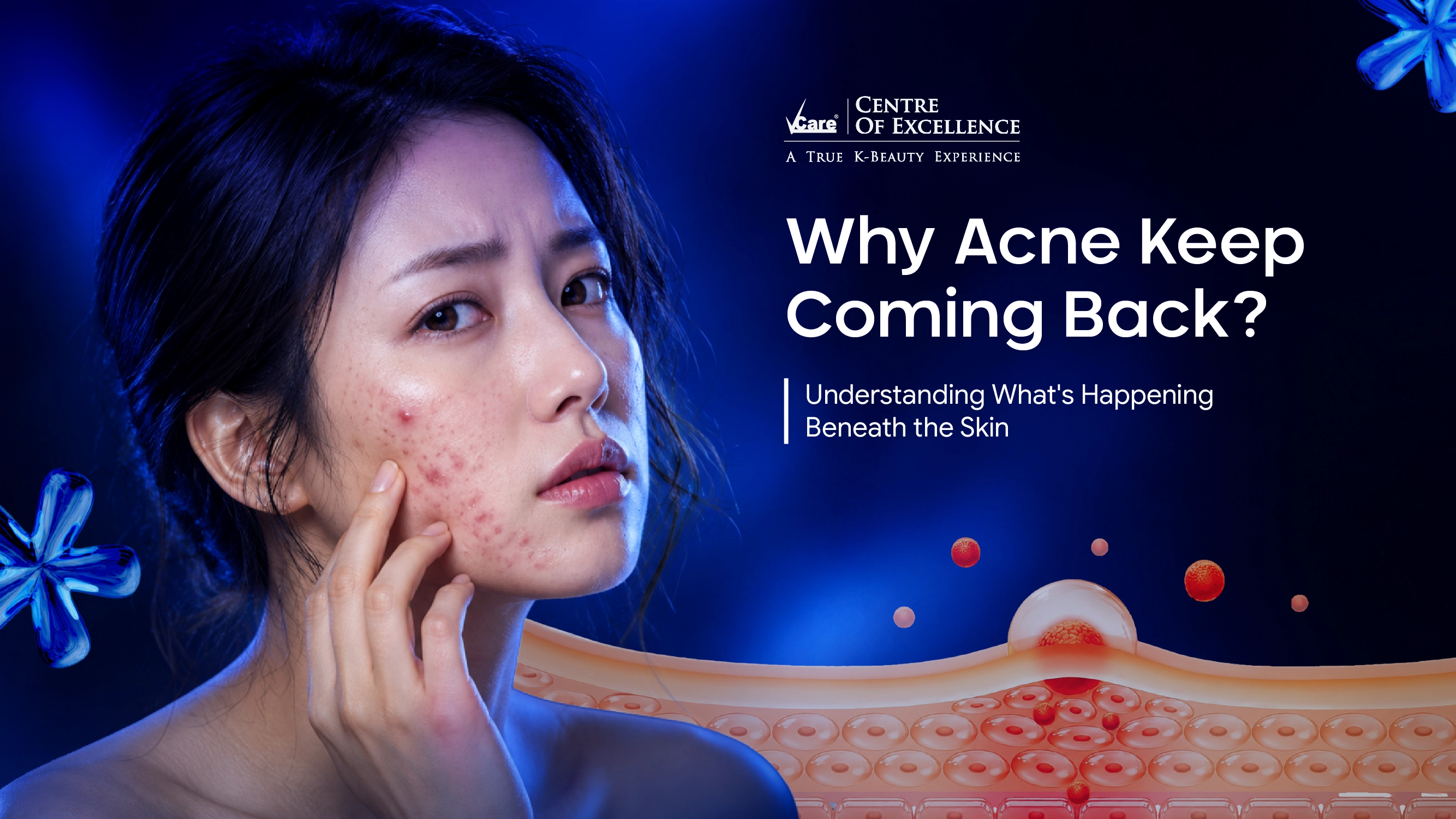
You stay home, and your face stays clear. As the festive season approaches or a special event is coming up, your sebaceous glands work overtime, causing acne. The relationship between pimples and people has remained complicated, as far as we all know.
You treat a pimple. It settles. A few days later, another appears. Then another. Sometimes the breakout seems to disappear, only to return in the same area or somewhere else on the face, chest, shoulders or back. This cycle is what makes persistent acne so frustrating.
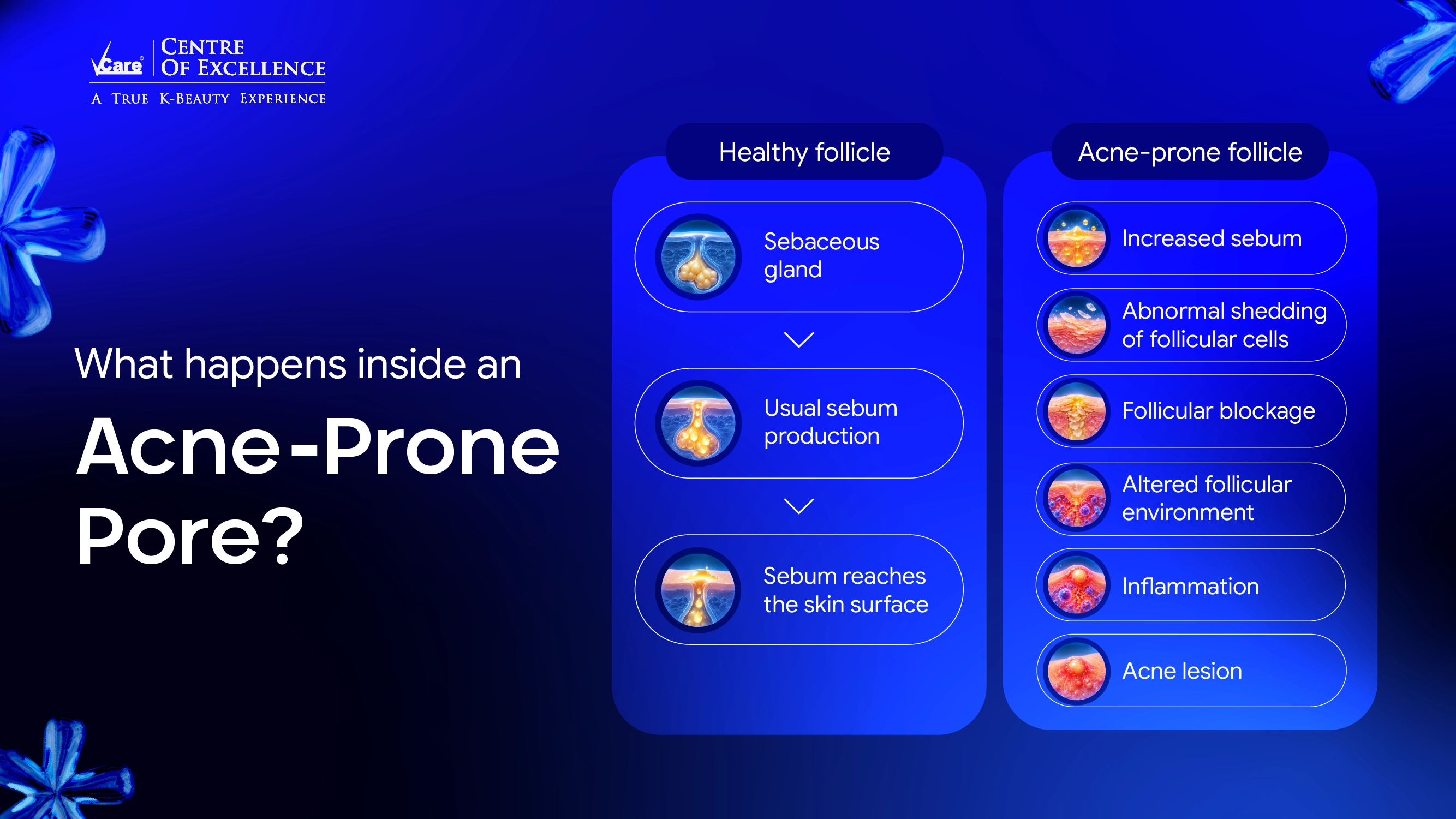
Treating one visible breakout does not stop new ones from developing. Changes in sebum production, follicular cell shedding, the follicular environment, Cutibacterium acnes, and inflammation work together to produce acne lesions.
To understand why acne keeps coming back, look beneath the skin.
What is Acne?
Acne, medically known as acne vulgaris, is a common inflammatory skin condition involving the pilosebaceous units. These structures contain a hair follicle and a sebaceous gland that produces sebum, an oily substance that helps protect and lubricate the skin. Acne develops when these follicles become clogged.
Acne most commonly appears on areas with a high concentration of sebaceous glands, including the:
- Face
- Chest
- Upper back
- Shoulders
It can produce different types of lesions, including blackheads, whiteheads, inflamed papules, pustules, nodules, and cysts.
Acne is not simply a problem of oily skin, and washing off the oil from the face isn't enough. Also, aggressive scrubbing can irritate the skin and worsen breakouts. The condition only develops through biological changes inside the follicle.
Acne vs Active Acne: Are They the Same Thing?
Acne is the overall skin condition. Active acne refers to lesions that are currently present and developing inflammation.
This distinction matters because acne isn't just one type of lesion.
Non-inflammatory acne includes:
- Whiteheads:
The follicular opening becomes blocked and remains closed at the surface.
- Blackheads:
The follicular opening remains open, and the material inside the follicle becomes dark.
When the acne process progresses into inflammation, lesions can become:
- Papules:
Small, raised, inflamed bumps.
- Pustules:
Inflamed lesions containing visible pus.
Severe inflammatory acne can involve nodules and cysts, which develop deeper in the skin and carry a higher risk of scarring.
So, when someone says, "My acne keeps coming back," the pimple is only the final stage of a process that started inside the follicle.
What Happens Beneath the Skin When Acne Forms?
Acne develops through:
Excess sebum + abnormal follicular keratinisation + changes involving Cutibacterium acnes + inflammation
These mechanisms do not operate independently. They interact within the pilosebaceous unit to create and sustain acne lesions.
1. Sebaceous glands produce sebum
Sebaceous glands are microscopic oil-producing glands connected to hair follicles. They produce sebum, which helps maintain the skin's surface. Androgens influence sebaceous gland activity. During puberty, increased androgen activity enlarges the sebaceous glands and increases sebum production. This is why acne commonly begins during adolescence. But acne is not limited to teenagers. Acne can persist into adulthood or begin for the first time. Hormonal fluctuations, genetics, medications and other factors can contribute to adult acne.
2. The follicle becomes clogged
The lining of the hair follicle contains skin cells called keratinocytes. Normally, these cells are shed in an orderly manner. In acne-prone skin, this process becomes abnormal. Sebum and follicular cells accumulate inside the follicle rather than being cleared normally. This blockage forms a microcomedone, the earliest stage of an acne lesion. As the blockage develops, it can become a whitehead or blackhead.
3. Cutibacterium acnes becomes involved
The skin naturally contains microorganisms, including Cutibacterium acnes. The problem develops in the altered environment of a clogged follicle. When sebum and cellular material accumulate inside the follicle, the follicular environment changes. C. acnes can increase within this environment, and the resulting immune response contributes to the development of inflammatory acne.
4. Inflammation turns the process into active acne
Once inflammation develops around the affected follicle, the lesion becomes visibly different.
The skin becomes:
- Red
- Swollen
- Tender or painful
- Raised
This is where a clogged follicle becomes an inflammatory acne lesion.
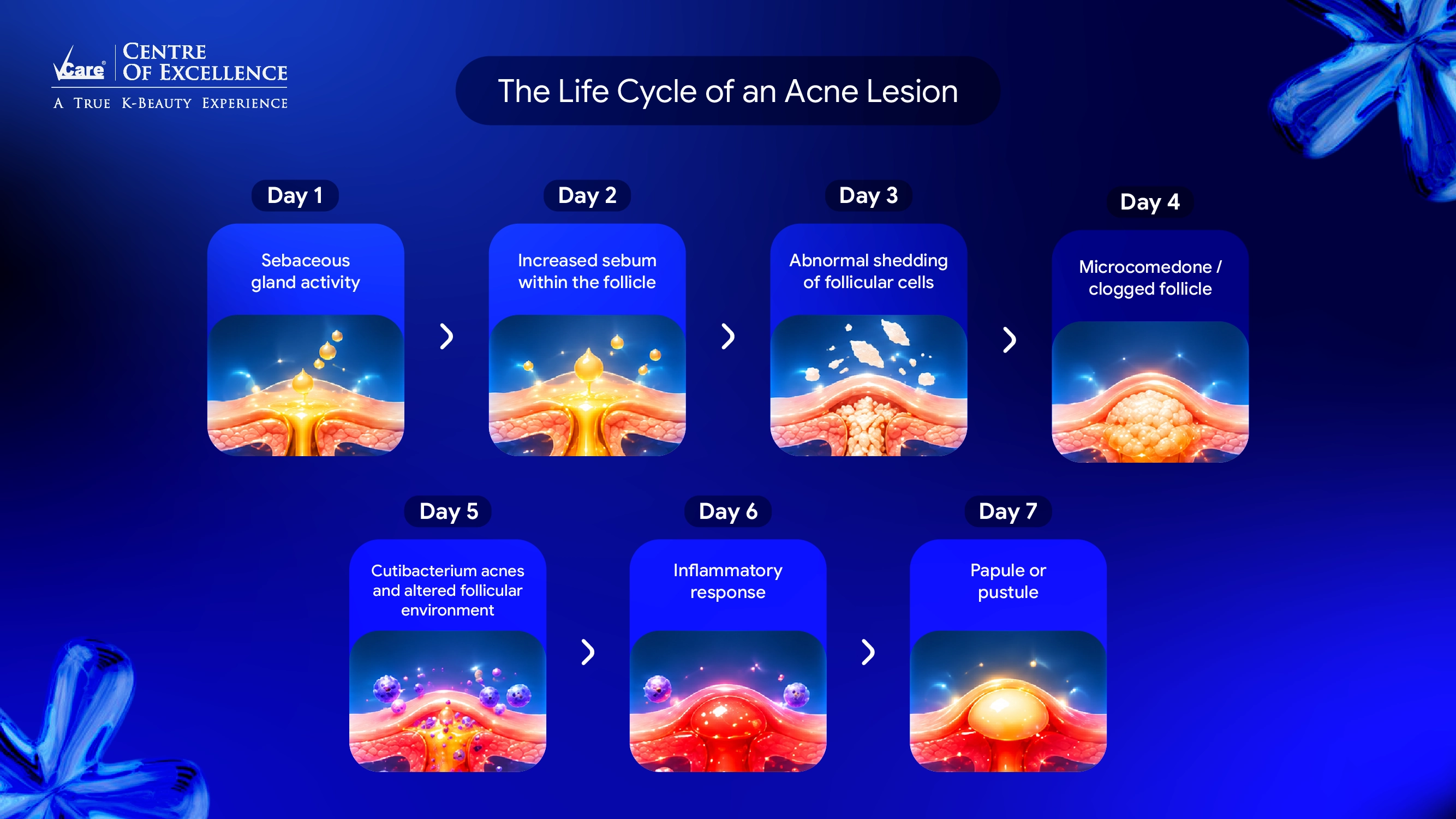
This is the biology behind the breakout you see in the mirror.
The disappearance of one pimple does not mean that the process has stopped.
Sebaceous gland activity continues
The sebaceous glands continue producing sebum every day. If sebaceous gland activity remains elevated, excess oil continues to enter the follicles.
Hormonal fluctuations can influence breakouts
Hormonal fluctuations can contribute to acne during puberty and adulthood. In adult women, breakouts can occur around hormonal changes associated with the menstrual cycle, pregnancy, perimenopause, menopause, or changes involving hormonal contraception.
Genetics can influence acne susceptibility
Acne also has a genetic component. People with a close family history of severe acne have a greater risk of developing acne themselves.
Stress can aggravate existing acne
Stress does not create acne out of nowhere, but it can worsen existing acne. Research shows a relationship between increased stress and greater acne severity. Products and irritation can worsen breakouts Some oily or comedogenic skincare, makeup and hair-care products can contribute to clogged pores. External factors such as skincare products, stress, sleep and certain dietary patterns can also influence acne in some individuals.
Instead of asking only:
"How do I get rid of this pimple?"
the more useful question becomes:
"What is continuing to create the conditions for new acne lesions?"
Can Only One Thing Cause Acne?
No.
Acne is a multifactorial condition.
This is why two people with apparently similar acne can respond differently to the same treatment. No single universal acne treatment exists. The right treatment depends on lesion type, severity, skin characteristics, medical history, and the biological factors contributing to acne.
The 2024 American Academy of Dermatology guidelines include topical retinoids, benzoyl peroxide, antibiotics, hormonal therapies, and isotretinoin as evidence-based acne treatment options, with treatment selected based on the individual patient's acne and circumstances.
When acne keeps returning, a higher dose of the same product may not help. It is essential to understand which part of the acne process to target.
What Are the Treatment Options for Active Acne?
Treatment depends on the types of acne and their severity.
Topical treatments
Topical treatments can prevent follicular blockage, acne-associated bacteria, and inflammation. Dermatologists recommend topicals based on the primary cause of acne. Treatment choice also depends on the individual's skin condition and the dermatologist's assessment.
Oral treatments
Dermatologists prescribe systemic treatments, including oral antibiotics and hormonal therapies, based on patients' skin conditions.
Device-based treatments
Certain energy-based technologies also help manage acne.
This brings us to an important question:
What happens when an acne treatment targets one of the biological structures involved in acne—the sebaceous gland itself?
AviClear for Active Acne: Targeting the Sebaceous Gland
One biological factor strongly associated with acne is sebaceous gland activity and sebum production.
AviClear takes a targeted approach to this part of acne biology.
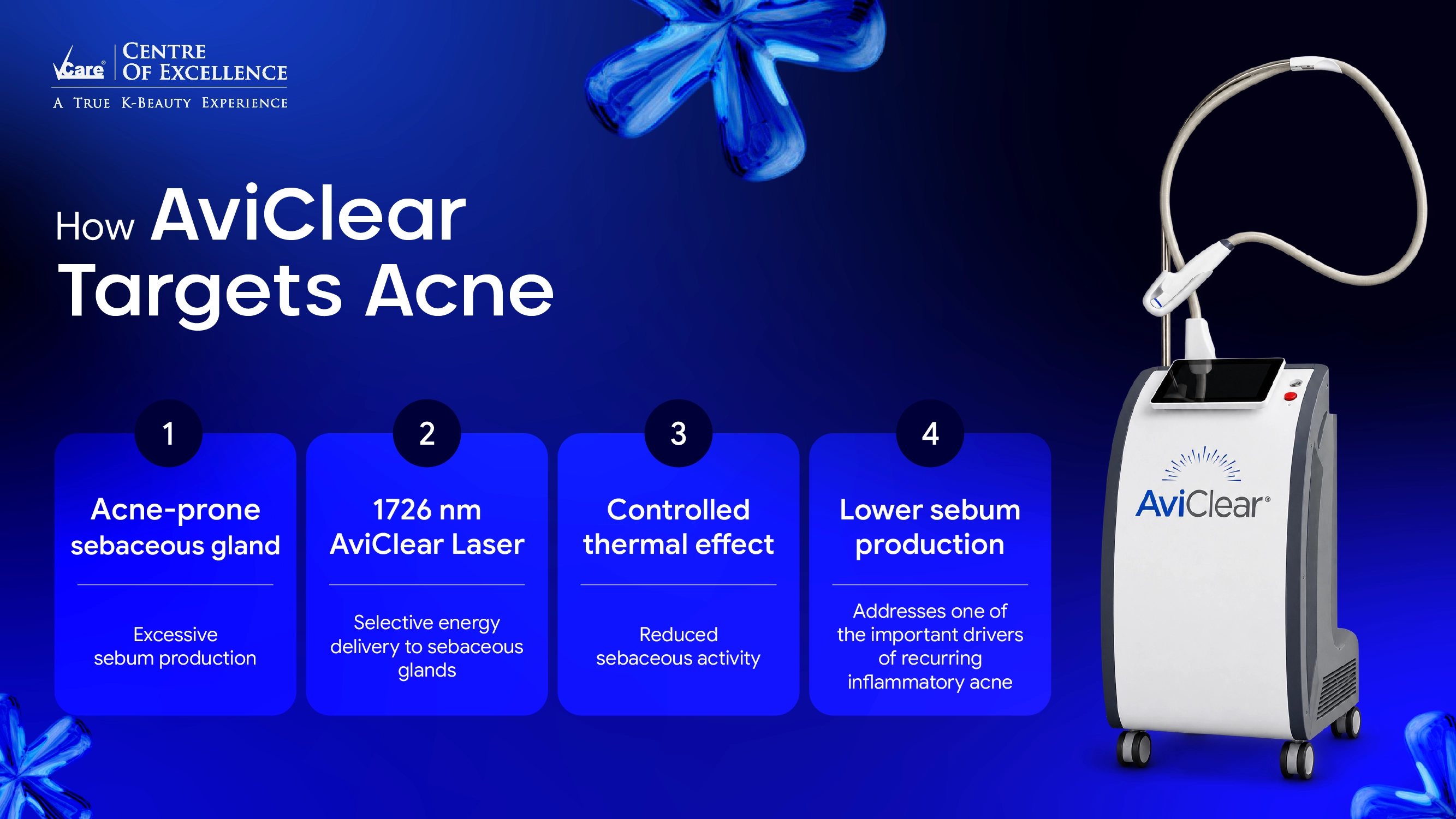
AviClear is a 1726 nm infrared diode laser system indicated by the FDA to treat mild to severe inflammatory acne vulgaris. The FDA documentation identifies the AviClear Laser System as a dermatology laser with a nominal wavelength of 1726 nm.
The technology is designed to target the sebaceous glands selectively.
How Does AviClear Work?
The principle is straightforward:
VCare COE describes AviClear as a seboselective 1726 nm laser designed to target the sebaceous glands beneath the skin and reduce excessive oil production.
What Makes AviClear Different From Surface-Level Acne Care?
Many acne treatments target processes at or near the skin surface.
AviClear takes a different approach by delivering laser energy to the sebaceous glands beneath the skin's surface.
What Can You Expect During an AviClear Treatment?
AviClear is designed as a short, non-systemic treatment procedure. The treatment uses the 1726 nm laser and integrated cooling technology. The three-session protocol is the treatment plan determined during your clinical consultation.
AviClear is designed for long-term acne control by targeting sebaceous gland activity, but individual outcomes vary. Discuss treatment suitability and expectations with a dermatologist.
When Should You See a Dermatologist for Persistent Acne?
- Breakouts continue despite consistent acne care.
- Acne is painful, deep or increasingly inflamed.
- New lesions continue to appear frequently.
- Acne is leaving scars or persistent marks.
- Acne is affecting confidence or quality of life.
- Adult acne develops suddenly or changes significantly.
Not every acne-like breakout is acne. Conditions such as rosacea, folliculitis, perioral dermatitis, and other skin disorders can resemble acne, so persistent or unusual breakouts warrant a proper dermatological assessment.
Active Acne Treatment at VCare COE
VCare's Centre of Excellence offers AviClear 1726 nm seboselective laser treatment as an advanced option for inflammatory acne. The technology targets the sebaceous glands with 1726 nm laser energy to reduce excessive sebum production.
A dermatological consultation precedes the treatment to determine whether AviClear is appropriate for the individual's acne.
For patients seeking active acne treatment in Chennai, the focus should be on identifying the acne's nature and severity first, then selecting an evidence-based treatment that targets the relevant biological mechanisms
The goal isn't to chase one breakout after another. It is to understand why the skin keeps producing new acne lesions and choose a treatment strategy accordingly.
Wrapping Up
When acne continues to return, the question is not only:
"How do I get rid of this pimple?"
It is:
"What is continuing to drive new acne formation?"
Once you answer that question, you can make treatment more targeted. For active acne, AviClear's 1726 nm laser targets the sebaceous glands, addressing a key biological component of acne rather than only what is visible on the surface. If acne persists or worsens despite your current routine, a dermatologist can assess your acne type and severity and determine whether a treatment like AviClear is right for you.
FAQs:
1. How long does acne take to clear up?
Most acne treatments take 4–6 weeks to show noticeable improvement, while significant clearing may take 2–3 months or longer. Results depend on acne severity and treatment consistency.
2. Can active acne go away on its own without treatment?
Yes, acne resolves on its own, but a few acne conditions can persist for a long time and cause scars. Early treatment helps control breakouts and reduce the risk of scarring.
3. Does popping pimples make acne worse?
Yes, popping or squeezing pimples can worsen inflammation and increase the risk of infection, dark spots, and permanent scars.
4. Can acne leave permanent scars?
Yes, severe active acne can leave permanent scars, particularly when deep lesions are involved. Early treatment can help reduce the risk of scarring.
5. How can you prevent new acne breakouts?
Wash your face gently twice daily, avoid picking pimples, and use non-comedogenic skincare products. Follow a consistent skincare routine and use acne treatments as directed.